
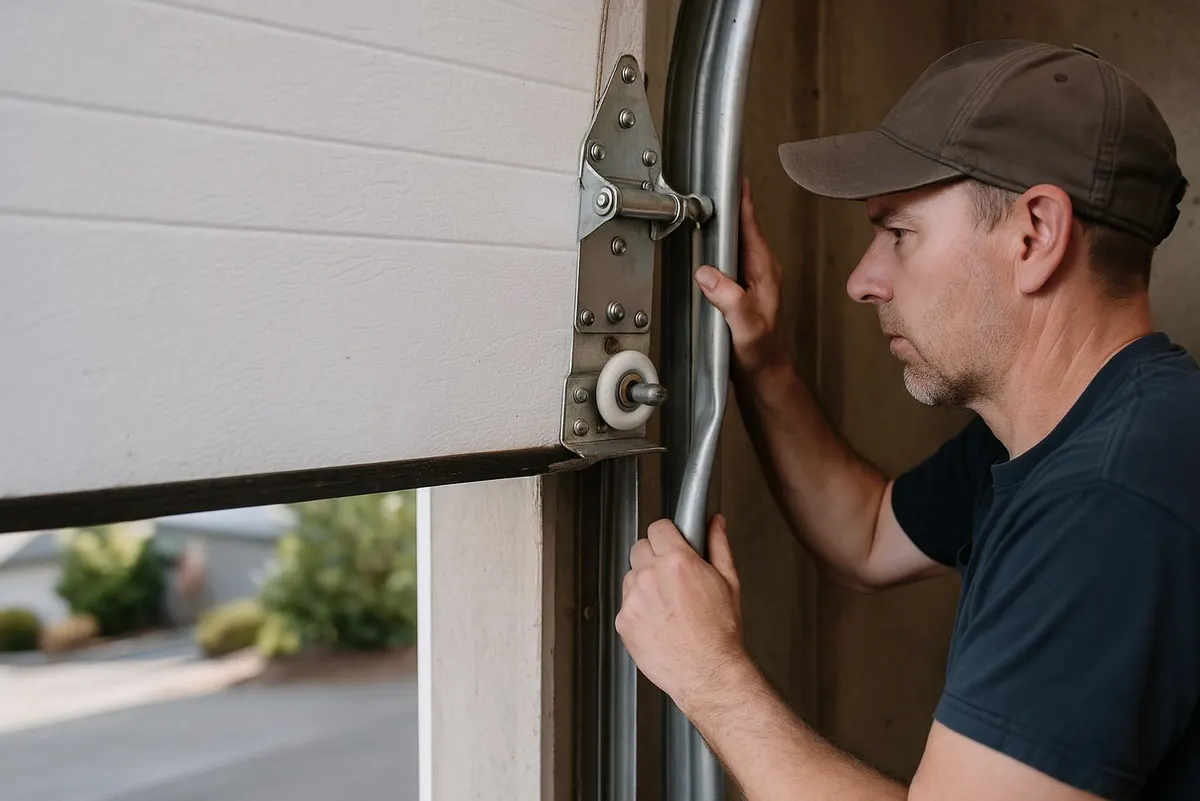
The short answer: yes, but not as much as the furnace salesman wants you to believe
Rule of thumb: if your garage is attached to the house, a leaky garage door will make your heating and cooling system work harder, but it's rarely the single biggest reason your bill went up. It's usually one of three or four contributors working together — an old door, a door between the garage and the house that doesn't seal well, maybe some gaps in the attic above the garage. If you've been arguing about whether "the garage door thing" is worth fixing, the honest answer is: it matters, but context matters more.
Why an attached garage affects the whole house
An attached garage isn't a separate building — it shares at least one wall, and often some ductwork or framing, with your living space. When that garage gets hot and humid in July or cold and damp after a December cold snap, that temperature swing pushes against the wall between the garage and your kitchen, laundry room, or bonus room above it. The garage door is the biggest opening in that space, so if it's leaking air, the garage itself swings closer to outdoor temperature, and your HVAC system has to fight a bigger temperature difference through that shared wall.
It's not like leaving a window open in the living room. It's more like having an uninsulated, imperfectly sealed room next to your conditioned space, with a door that isn't really a door — it's a series of panels with weatherstripping that degrades over time.
Exceptions worth knowing before you place blame
- If your garage is detached, this whole argument doesn't apply to your heating and cooling bill at all — it might still affect whatever's stored out there, but not the thermostat.
- If there's no ductwork or shared wall with living space (say the garage only borders a mudroom with its own insulation), the effect is much smaller.
- If your attic insulation above the garage is thin or missing, that's often doing more damage than the door itself. A leaky door and a leaky attic are a bad combination, and fixing only one won't fully solve it.
- If the door itself is newer and insulated but the weatherstripping has failed, that's a cheap fix, not a reason to replace the whole door.
What a leaky garage door actually looks like
Before you spend money, check for these signs — most take less than five minutes:
- Daylight visible around the edges of the closed door, especially at the corners
- A gap under the bottom seal you can slide a finger or a sheet of paper under
- Weatherstripping that's cracked, flattened, or pulling away from the track
- Visible warping or bowing in the panels, which is common here given how much humidity and heat the doors take in summer, and how pine pollen and moisture collect around the tracks and hardware
- A noticeably colder or hotter garage than you'd expect compared to outside temperature
What actually moves the needle this time of year
Heading into winter on the Crystal Coast doesn't mean brutal cold, but it does mean swings — mild stretches, the occasional hard freeze or ice event, and a lot of damp air in between. That combination is rough on old weatherstripping, which can get brittle and shrink right when you need it most. Fall is a smart time to check the seal before you're relying on the heat pump through an ice storm with cold air pouring into the garage and against that shared wall.
A few concrete, low-cost fixes usually handle most of the leak:
- Replace the bottom weatherstripping (the astragal). This is the seal that touches the garage floor and takes the most wear. It's inexpensive and makes a noticeable difference in draft under the door.
- Replace side and top weatherstripping if it's cracked or has pulled loose from the track — this stops the gaps you'd see daylight through.
- Check the threshold or floor seal, especially if your garage floor has settled or cracked, which lets water and air in from below.
- Weatherstrip the door between the garage and the house too — homeowners often forget this door leaks just as much as the big one.
If the door panels themselves are warped, cracked, or the door is older and uninsulated, weatherstripping alone won't fix it — that's a case for talking about a replacement door with an insulated core, which also helps keep the garage more stable in both the summer humidity and the occasional winter cold snap.
When to call Morehead City Garage Door Experts
If you've checked the obvious spots and still feel drafts, or the door looks warped, sagging, or the seals are too far gone to patch, it's worth having someone look at the whole system rather than guessing. Our Preventive Maintenance visits include checking the weatherstripping, seals, and door alignment — because a door that's slightly out of square will never seal right no matter how much new rubber you put on it. If the door itself needs to go, our Garage Door Installation service includes insulated door options built for the heat, humidity, and storm swings that come with living on the Crystal Coast.
If you're a homeowner or business owner in Morehead City, Beaufort, Atlantic Beach, Newport, Emerald Isle, Cape Carteret, Havelock, or Swansboro and you want an honest read on whether it's your door, your attic, or both, give Morehead City Garage Door Experts a call. We'll settle the argument for you — and fix whatever's actually costing you money.